
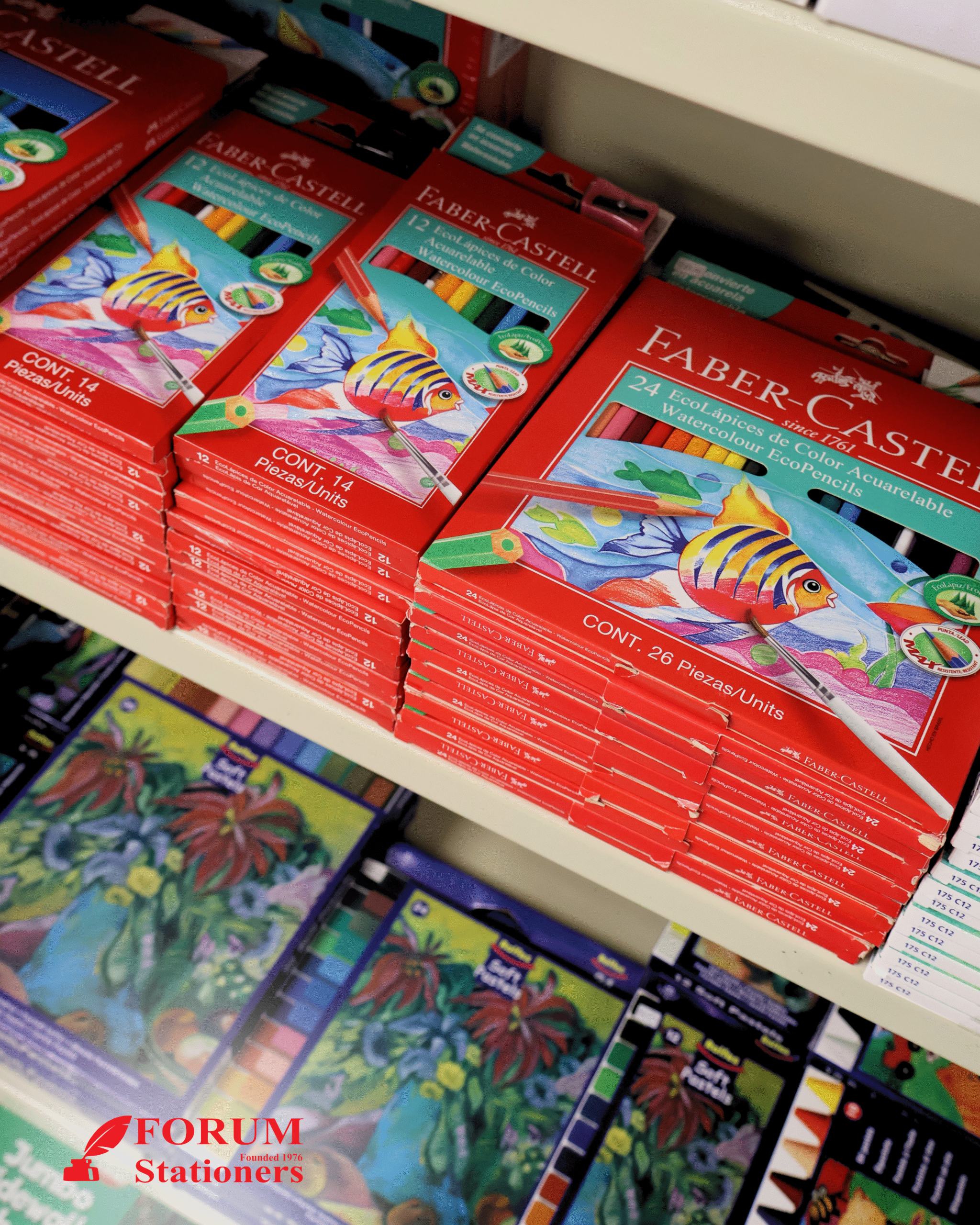
If you’ve ever walked past a set of watercolour pencils and wondered what all the…

The History of the Pen: From Quills to Ballpoints
When you pick up a pen to jot down notes, sign a document, or even doodle during a meeting, have you ever paused to think about how this everyday tool came to be? The journey of the pen is a fascinating tale of human innovation, creativity and the enduring desire to communicate. At FORUM Stationers, we’re passionate about stationery, so today, let’s take a journey through time to explore the history of the pen, from delicate quills to the modern ballpoint pens we use every day.
The Feathered Beginnings: Quills
Before pens as we know them existed, people used a variety of tools to write, including sharp sticks, bones and brushes. But it was the quill pen that truly revolutionised writing for centuries.
- Origin: Quill pens were made from the flight feathers of large birds like geese, swans, or turkeys.
- Why Quills? The hollow shaft of the feather could hold ink, and the tip could be sharpened to a fine point for smooth writing.
- Usage: Quills dominated from the 6th century up until the 19th century in Europe and were used by monks, scholars and clerks alike.
- Maintenance: Writers had to regularly trim and shape the quill tips for optimal ink flow, which was not exactly a low-maintenance task.
Despite their charm, quills were fragile and not very durable. Plus, writing with ink that needed constant dipping was messy and time-consuming.
Enter the Metal Nib
By the 19th century, technology pushed pens into a new era with the invention of the metal nib. These were often made from steel and replaced quills as the preferred writing instrument.
- Advantages: Metal nibs were more durable, consistent in shape and didn’t need constant sharpening.
- Mass Production: Factories could mass-produce metal nibs, making pens more accessible and affordable.
- Ink: Still required dipping into an inkwell, but writing became smoother and easier.
The Fountain Pen Revolution
The big leap came with the fountain pen, which included an internal ink reservoir, eliminating the need for constant dipping.
- Invention: The earliest fountain pens appeared in the early 1800s, but it wasn’t until the late 19th century that practical designs emerged.
- Design: A nib connected to a reservoir fed ink to the tip by capillary action and gravity.
- Convenience: Fountain pens were more portable and cleaner than their predecessors, making them highly popular among professionals and writers.
- Still Loved Today: Many fountain pens remain treasured for their smooth writing experience and classic style.
The Ballpoint Pen: Writing Made Effortless
While fountain pens improved convenience, the ballpoint pen was the true game-changer.
- Invented by: Hungarian journalist László Bíró in 1938.
- How it works: A tiny ball bearing in the pen’s tip rolls ink onto the paper as you write.
- Benefits: Ballpoint pens are quick-drying, less messy, durable and ideal for everyday use.
- Mass Adoption: By the mid-20th century, ballpoint pens replaced most other writing instruments worldwide.
Today, ballpoints come in countless colours, designs and price points, making them the most popular pen type globally.
The Pen Today and Tomorrow
From feather quills to sleek ballpoints, the pen has constantly evolved, blending art, science and practicality. At FORUM Stationers, we celebrate this legacy by offering a wide selection of pens, from classic fountain pens for the aficionados to reliable ballpoints for your daily needs.
And with digital technology rising, the pen still holds its place as a timeless tool, a symbol of creativity, expression and connection.

Related Posts

This Post Has 0 Comments